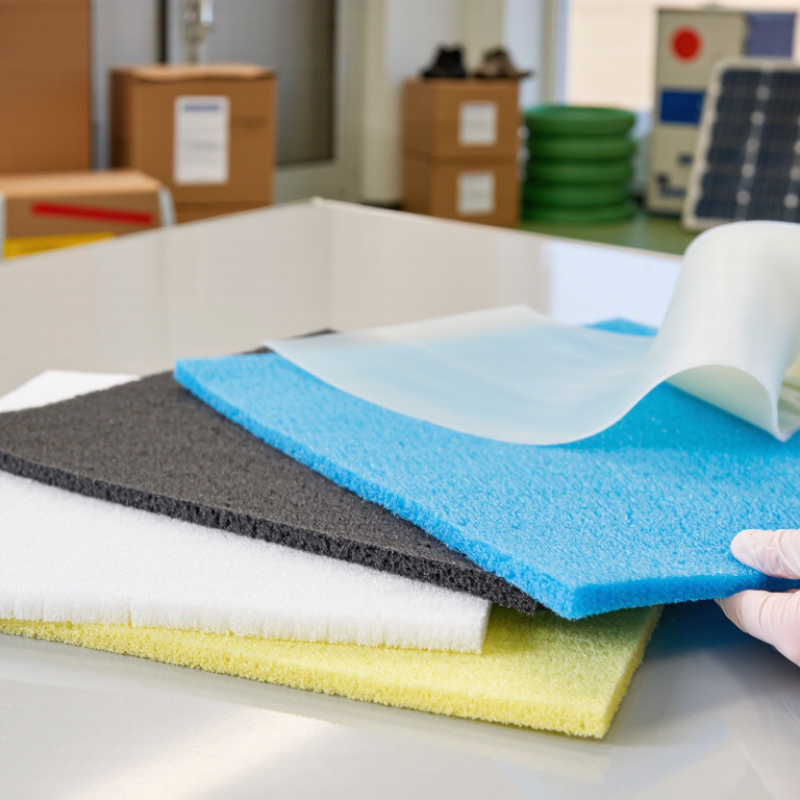
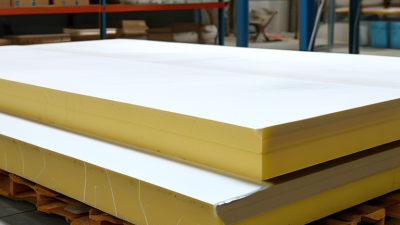
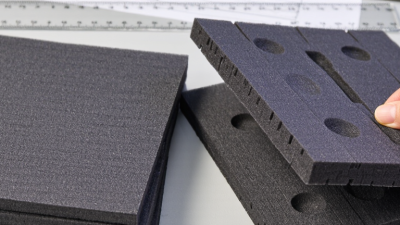
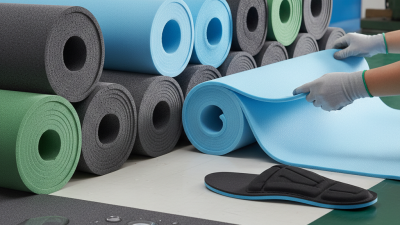
Choosing the right Eva Sponge Sheet is not simply a matter of selecting the thickest or softest option. Performance depends on density, vinyl acetate content, cell structure, compression resistance, flexibility, and surface finish. A sheet used under sports equipment needs different properties from one used inside packaging or footwear. A soft sample may feel comfortable, yet compress permanently after repeated loading.
Industry data shows why this decision matters. Grand View Research’s Ethylene Vinyl Acetate Market report identifies packaging, footwear, automotive, and solar applications as significant demand areas. Its analysis also forecasts continued market growth through 2030. MarketsandMarkets similarly links EVA demand with lightweight cushioning, impact absorption, and flexible processing. These reports support a practical point: application requirements should guide material selection, not attractive product descriptions.
Polymer specialist George Wypych states, “Foam properties depend on the polymer, blowing agent, and processing conditions.” That principle remains useful when comparing an Eva Sponge Sheet. Ask for density data, compression-set results, thickness tolerance, and temperature-resistance information. Check the actual sample under pressure, bending, and surface contact. Small differences become visible when a sheet is cut, bonded, or repeatedly compressed.
No sheet is perfect.
A purchasing mistake can happen when buyers compare only price per square meter. I have seen specifications look impressive until the material tears around a sharp edge. Supplier claims also require verification. A dependable choice balances comfort, durability, manufacturability, safety requirements, and service life. The best Eva Sponge Sheet is the one that continues performing in the real environment, not merely in a product catalogue.
How to Choose the Best EVA Sponge Sheet for Your Needs?
Identify the Main Uses and Performance Requirements for EVA Sponge Sheets
EVA sponge sheets suit many practical applications, including padding, insulation, packaging, gaskets, and craft projects. Your intended use should guide every material decision. A shoe insole needs resilience and comfort. Protective packaging needs shock absorption and stable thickness. A sealing pad needs flexibility and reliable compression recovery. These requirements are different.
Check density, hardness, thickness, and cell structure before purchasing. Higher density may improve durability, but it can reduce softness. Closed-cell EVA usually resists water better and offers consistent cushioning. Measure compression set when the sheet will remain squeezed for long periods. Consider temperature exposure, surface friction, cutting accuracy, and bonding method. Small details matter. I have found that a sheet performing well in a sample can behave differently after repeated bending. Real-use testing is still necessary.
Tips: Request small samples and test them under actual pressure, temperature, and moisture conditions. Compare thickness before and after compression. Review technical data carefully, but do not treat every number as a guarantee. Sometimes, a slightly softer sheet works better than a stronger one. Avoid choosing by price alone. A cheaper sheet may need earlier replacement. Keep notes from each trial, because memory is unreliable.
How to Choose the Best EVA Sponge Sheet for Your Needs?
When I evaluate EVA sponge sheets, I compare foam type, density, thickness, and surface finish together. Closed-cell EVA resists water and provides dependable cushioning. Open-cell foam feels softer but may absorb moisture more easily. Density affects support, rebound, and compression resistance. It does not always indicate softness. I once chose a sheet by density alone. That shortcut failed.
Thickness should match the expected impact and available space. A thin sheet suits light padding, liners, and flexible covers. A thicker sheet absorbs stronger impacts but can reduce bending room. Measure the gap before ordering. A practical test helps. Press the foam with the intended load, then check recovery after several minutes. Inspect both sides, too.
Surface finishes change grip, appearance, and processing behavior. Smooth faces clean easily and suit protective covers. Embossed patterns can improve handling by adding texture. Rougher surfaces may hold materials better, but they can collect dust. If bonding is required, confirm whether the finish accepts the selected adhesive. Test a small sample under real temperature and moisture conditions. Specifications can mislead. Actual testing reveals unexpected compression, slipping, or edge tearing.
| EVA Foam Option | Typical Density | Available Thickness | Surface Finish | Key Characteristics | Recommended Applications | Advantages | Limitations and Selection Notes |
|---|---|---|---|---|---|---|---|
| Standard Closed-Cell EVA | 45–90 kg/m³ | 1–50 mm | Smooth, flat, or lightly textured | Lightweight, flexible, buoyant, and resistant to water absorption. Provides moderate cushioning and insulation. | Packaging inserts, craft projects, protective pads, gaskets, and general-purpose liners | Easy to cut, laminate, die-cut, and thermoform; suitable for many everyday uses | Not the best choice for high-load compression or severe abrasion. Select density according to the required firmness. |
| Soft EVA Foam | 30–60 kg/m³ | 2–30 mm | Fine-cell smooth surface | Highly flexible with a soft hand feel and good shock absorption at low to moderate loads. | Cosmetic packaging, soft padding, costume accessories, children’s craft products, and comfort liners | Comfortable, lightweight, and easy to conform around irregular shapes | Can compress more permanently under continuous heavy loads and may tear more easily than higher-density grades. |
| Medium-Density EVA Foam | 60–100 kg/m³ | 2–40 mm | Smooth, embossed, or fabric-laminated | Balanced cushioning, flexibility, durability, and dimensional stability. | Tool cases, sports padding, footwear components, equipment protection, and reusable packaging | Good general-purpose balance between comfort, support, and processing performance | A practical starting point when the exact load, firmness, or impact requirement is not yet known. |
| High-Density EVA Foam | 100–180 kg/m³ | 3–30 mm | Fine smooth, textured, or laminated | Firm, supportive, and more resistant to compression, indentation, and wear than lower-density foam. | Structural inserts, protective cases, industrial pads, orthopedic supports, and durable shoe components | Better load-bearing capability, edge definition, and resistance to repeated handling | Heavier, less compliant, and usually more expensive per sheet volume than low-density EVA. |
| Cross-Linked EVA | 60–150 kg/m³ | 1–40 mm | Uniform closed-cell, smooth, or micro-textured | Fine and consistent cell structure with good resilience, low water absorption, and improved surface appearance. | Automotive trim, sports goods, footwear, premium packaging, and molded protective parts | Clean appearance, good recovery after compression, and reliable thermoforming performance | May require more specialized processing and can be harder to recycle than some non-cross-linked foam structures. |
| Non-Cross-Linked EVA | 40–120 kg/m³ | 1–50 mm | Smooth, open-textured, or embossed | Thermoplastic structure that can be heat-formed and is generally easier to process and recycle than cross-linked grades. | Packaging, temporary cushioning, display materials, light-duty liners, and fabricated parts | Good processing flexibility and suitability for heat welding or lamination in selected constructions | May have lower resilience, less uniform cells, or lower dimensional stability depending on formulation and processing. |
| Low-Density EVA Sheet | 25–60 kg/m³ | 1–20 mm | Smooth or lightly embossed | Very lightweight and compressible, with basic cushioning and thermal insulation properties. | Lightweight packaging, arts and crafts, disposable display protection, and low-load padding | Low material weight, simple handling, and economical for non-structural applications | Limited support and durability under high pressure, sharp edges, or repeated mechanical loading. |
| High-Resilience EVA Sheet | 80–140 kg/m³ | 3–25 mm | Smooth or fine-textured | Designed to recover quickly after impact or compression while maintaining a resilient feel. | Sporting goods, impact pads, protective equipment, footwear midsoles, and reusable cushions | Good rebound, repeated-impact performance, and long-term cushioning behavior | Resilience does not equal maximum firmness; confirm compression behavior under the actual load and temperature. |
| Smooth Surface Finish | Depends on foam grade | 0.5–50 mm | Flat, uniform, low-profile surface | Provides a clean appearance and a relatively even contact area for printing, laminating, or adhesive application. | Labels, gaskets, liners, packaging, clean visual displays, and laminated products | Easy to clean and suitable for many converting operations | Can be more slippery than textured surfaces and may show scratches or surface marks more readily. |
| Embossed or Textured Surface | Depends on foam grade | 1–30 mm | Grain, diamond, ribbed, or patterned texture | Improves visual interest and can increase surface friction or help conceal minor marks. | Floor mats, tool trays, protective covers, sports products, and decorative panels | Better grip and decorative value than a plain surface in suitable applications | Texture may reduce the effective contact area and can complicate printing, bonding, or precision sealing. |
| Fabric-Laminated EVA | Foam plus laminate weight | 2–20 mm | Textile, nonwoven, or mesh-faced | Combines EVA cushioning with improved appearance, tactile feel, tear resistance, or bonding capability. | Protective cases, bags, footwear, upholstery panels, and interior trim | Enhanced aesthetics and surface durability; may improve sewing or bonding performance | Laminate compatibility, peeling strength, moisture exposure, and edge finishing should be tested before production. |
| Adhesive-Backed EVA | Depends on foam grade and adhesive | 0.8–10 mm | Smooth or lightly textured face with release liner | Provides a ready-to-apply foam layer for mounting, sealing, spacing, cushioning, or vibration reduction. | Anti-slip pads, mounting strips, cabinet protection, seals, and lightweight sound-damping layers | Fast installation and reduced need for separate adhesive application | Adhesive performance depends on surface cleanliness, temperature, pressure, dwell time, and long-term load. |
| 1–3 mm Thickness | Any suitable density | 1–3 mm | Usually smooth or lightly textured | Flexible, conformable, and suitable where only a thin protective or sealing layer is required. | Gaskets, thin liners, labels, crafts, packaging separators, and surface protection | Easy to die-cut and bend; minimal increase in product dimensions | Limited cushioning travel and lower tolerance for large gaps or substantial impact energy. |
| 5–10 mm Thickness | Any suitable density | 5–10 mm | Smooth, embossed, or laminated | Offers a useful balance of cushioning, flexibility, and manageable part thickness. | Equipment cases, protective packaging, sports pads, drawer liners, and general cushioning | Versatile thickness range for moderate shock absorption and gap filling | Performance still depends strongly on density, compression set, impact energy, and support conditions. |
| 15–30 mm Thickness | Medium to high density recommended | 15–30 mm | Smooth, textured, or laminated | Provides greater cushioning distance, insulation, and gap-filling capability than thin sheets. | Heavy-duty packaging, protective inserts, kneeling pads, equipment supports, and acoustic or thermal liners | Better impact absorption and comfort when adequate space is available | Requires more storage space and may need machining, skiving, or lamination for complex shapes. |
| 30–50 mm Thickness | Medium to high density recommended | 30–50 mm | Usually smooth, laminated, or molded | Designed for substantial cushioning, insulation, spacing, or support in larger assemblies. | Large protective cases, industrial cushioning, flotation components, seating layers, and custom fabricated products | High cushioning potential and strong gap-filling performance | Thicker foam is not automatically better; excessive thickness can bottom out, deform, or interfere with fit and closure. |

How to Choose the Best EVA Sponge Sheet for Your Needs?
Choosing an EVA sponge sheet starts with the chemicals it will meet. Diluted acids and alkalis may be manageable, but oils, fuels, and solvents can cause swelling. I once saw a sheet soften after only a short solvent exposure. That failure was avoidable. Request chemical-resistance data, then test a small sample under real contact time and pressure. Laboratory results help, but field conditions can be messier.
Flexibility matters when the sheet wraps around corners or absorbs repeated movement. Check elongation, compression set, and tear strength, not flexibility alone. A very soft sheet may seal well today and stay permanently compressed tomorrow. Bend samples around the actual radius. Watch for whitening, cracks, or surface splitting. Small details matter.
Durability depends on abrasion, moisture, sunlight, and repeated loading. For outdoor use, ask about UV aging and water absorption. Temperature tolerance also needs careful review. Compare continuous and short-term temperature ratings, because heat spikes can damage foam faster than steady warmth. Cold can make EVA stiffer and less forgiving. Use a thermal-cycle test when possible. The first sample may look perfect, yet fail after several hot-and-cold cycles. Supplier test methods should be clear, traceable, and relevant to your application.
Typical comparative performance ratings for common EVA sponge sheet constructions
Ratings use a 1–5 scale, where 5 indicates stronger typical performance. Cross-linked and high-density EVA sheets generally provide better durability and temperature tolerance, while flexible low-density sheets offer greater softness and flexibility. EVA commonly resists dilute acids, alkalis, water, and many salts, but resistance to oils, fuels, and solvents depends on the formulation and should be verified before use.
Choosing the best EVA sponge sheet starts with the job’s actual dimensions. Measure the covered area, then allow a small trimming margin. A sheet that is too small creates weak joins. One that is oversized may waste material. Thickness also matters. Thin EVA suits liners and light cushioning, while thicker sheets absorb more impact.
Color is not only cosmetic. Dark colors hide grease and scuff marks, while bright colors improve visibility during assembly. Choose a pressure-sensitive adhesive when quick bonding is important. For uneven surfaces, test adhesion after 24 hours. Surface texture, temperature, and dust can change the result. I once selected adhesive backing for a rough panel, and the edges lifted later. That choice was not ideal.
Tips: Request a sample before buying in bulk. Press it onto the real surface. Check peeling, compression, and flexibility. Use a sharp utility knife for simple straight cuts. A steel rule helps. For repeated shapes, die cutting can improve consistency. CNC cutting works well for detailed patterns, but it usually needs accurate digital drawings. Keep the EVA sheet flat during cutting. Warped material can produce inaccurate edges. Measure twice. Cut once.
Quality standards should match the sheet’s actual application. Check density, hardness, tensile strength, compression set, and dimensional tolerance. Ask for recent test reports, not only product descriptions. A reliable sample should recover after repeated compression and show an even cell structure. Inspect the edges, surface, and odor under normal storage conditions. Small defects matter.
Supplier reliability is equally important. Confirm production capacity, quality control procedures, material traceability, and delivery records. Request samples from different batches when consistency is critical. Clear communication helps prevent errors in thickness, color, and packaging. Do not guess.
Pricing deserves a wider view. Compare material cost, tooling fees, minimum order quantities, freight, inspection, and possible waste. The cheapest quote may create higher replacement costs later. I have found that low prices can hide limited testing or unstable supply. Still, a higher price does not automatically prove better quality. Review the evidence carefully.
Customization can improve fit and performance. Discuss thickness, density, color, adhesive backing, die-cut shapes, perforations, and flame or water resistance requirements. Provide technical drawings with tolerances and intended use. Ask about prototype charges, mold ownership, sampling time, and production lead time. A supplier may promise flexibility, but written specifications protect both sides. Leave room for revision; the first sample is not always right.