Choosing a Black Eva Sheet in 2026 takes more than comparing price and thickness. EVA foam can feel soft in the hand yet vary sharply in density, cell structure, compression recovery, and surface finish. Those differences matter when a sheet must cushion equipment, line a case, or hold its shape under repeated use. A sample may look uniform on a desk. Cut edges can tell another story.
Market reports provide useful context, but not a product specification. Grand View Research’s global ethylene-vinyl acetate market coverage tracks demand across industries; it does not establish the quality of any individual black foam sheet. Buyers should treat broad market figures as background, then verify the grade, dimensions, density, and tolerances on the supplier’s technical data sheet. Ask how measurements were taken. That detail is easy to overlook.
I can’t responsibly attribute a quotation to a named Black EVA Sheet expert without a verifiable source. The practical advice remains clear: request a sample, measure it, and test it under the conditions it will face. Press it with a thumb. Check whether it rebounds evenly, smells unusually strong, or sheds particles when cut. Those quick checks are useful, though they do not replace documented test results. In this guide, we’ll compare the specifications, supplier evidence, and application details that help buyers choose with greater confidence.
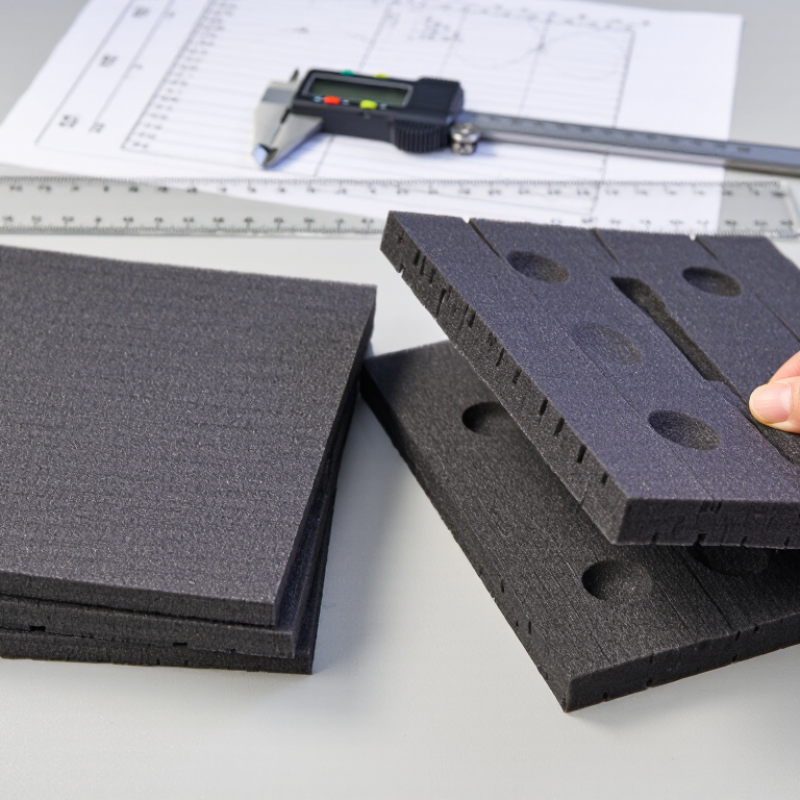
Choosing black EVA foam starts with its grade, not its color alone. Ask for the polymer blend and the intended use. EVA may be blended with other polymers or contain fillers, which can change flexibility, resilience, odor, and compression recovery. A denser sheet is not automatically better. Match density and hardness to the load: a firm insert protects equipment, while a softer sheet cushions light impacts.
Color needs its own check. Black pigment can make sheets look similar, but it does not prove equal UV stability or batch consistency. Compare samples in daylight and under the lighting where the foam will be used. Check both faces and a freshly cut edge. Small shade differences happen. They may matter in visible panels, less so inside a case.
Cell structure affects feel and performance. Look for evenly distributed cells, consistent thickness, and clean-cut edges; large voids can create weak spots. Closed-cell EVA generally resists water absorption better than open-cell foam, but confirm the specification for the actual grade. Press a sample, release it, and note how quickly it recovers. Then test it under the expected load. A quick hand check helps, but it is imperfect. Request data for density, hardness, compression set, and thickness tolerance before comparing suppliers.
When comparing black EVA foam sheets in 2026, check how density was measured. ISO 845 specifies a method for determining the apparent density of cellular plastics and rubbers. A useful supplier specification should state the density, units, and test method—not just label the foam “firm.” Compare sheets tested on the same basis. Different sample sizes or methods can make figures less meaningful.
Density helps narrow the choice, but it does not prove load-bearing performance. For a protective insert under a tool case, a denser sheet may resist compression better. Yet thickness, cell structure, and the time under load also matter. Ask for compression stress data at a stated deformation, such as 25 percent, and check whether the test conditions match your use. A sheet supporting a brief impact faces a different job from one compressed beneath equipment all day.
Test a sample if possible. Place the expected load on a cut piece, then measure how much it compresses and whether it recovers. Keep the test simple, but record the load and duration. I once focused too much on the density number; the softer sample still suited the application because the load was spread across a wide surface. That detail is easy to miss. Density is a starting point, not a verdict.
How to Choose Black EVA Foam Sheets in 2026
Choose thickness around the task, not appearance alone. A thin sheet may suit a close-fitting liner, while a thicker sheet allows more room for compression. Check the available space with a ruler, then test a sample under the actual load. It is a small step, but often prevents a poor fit.
ASTM D2240 measures indentation hardness using a durometer. Ask which scale was used, such as Shore A or Shore C, because readings from different scales are not directly interchangeable. Also request the test conditions, including specimen thickness and reading locations. Foam cells, surface texture, and support beneath a thin sheet can affect the result. Hardness is not density, and it does not predict cushioning by itself.
Compare sheets using the same scale and method. Press a sample with your thumb, then check whether it rebounds as the application requires. That quick check is useful, but it is not a substitute for documented measurements. If the sheet will carry repeated loads, test a cut piece under those loads; I would not rely on one durometer number alone. A little uncertainty remains, especially when comparing results from different suppliers.
How to Choose Black EVA Foam Sheets in 2026
When choosing black EVA foam sheets, compression set deserves close attention. This value shows how much thickness remains lost after sustained compression. A lower percentage usually indicates better recovery and longer service life. However, test conditions matter greatly. Ask for the ASTM D3575 method used, including temperature, compression level, exposure time, and conditioning procedure. Results without these details are difficult to compare.
Measure the sheet before and after testing with calibrated equipment. Record thickness at several points, not just one location. Uneven cell structure can distort a single reading. Resilience also matters. A resilient foam should recover quickly after pressure, bending, or repeated impact. Under ASTM D3575-related evaluation, confirm which applicable resilience procedure was followed. Different test setups may produce different results.
Black foam can absorb more solar heat than lighter colors. Test samples near their expected working temperature. A sheet may perform well indoors but soften outdoors. I have seen specifications look impressive until humidity and heat were added. That is worth questioning. Check density, hardness, thickness tolerance, and visual defects alongside compression set. Small tears around cut edges can become failure points. Ask for recent laboratory data from production samples, not only a polished product sheet. Real performance is often less tidy.
Compression Set and Resilience Screening Based on ASTM D3575-Oriented Test Conditions
The chart presents representative, non-brand benchmark values for black EVA foam sheet grades. Lower compression set indicates better dimensional recovery after long-term compression, while higher resilience indicates faster elastic recovery. Actual results depend on density, hardness, cell structure, thickness, temperature, and test conditioning; verify supplier reports using the applicable ASTM D3575 method before selection.
Choosing black EVA foam sheets in 2026 requires more than checking thickness and price. Sheet dimensions should be verified after conditioning, because heat can cause slight shrinkage or warping. Measure length, width, and thickness at room temperature, then compare results with the stated tolerance. A 2024 market analysis by Grand View Research projects continued growth in EVA foam demand through 2030, increasing pressure for consistent manufacturing quality. Small dimensional errors matter when sheets must fit protective inserts, floor mats, or equipment housings.
Surface finish also affects handling and appearance. A closed-cell sheet with a fine texture is easier to clean, while a smoother surface can show scratches quickly. Run a simple rub test with a dry cloth. Check for powder, uneven gloss, and visible pinholes. It is not perfect, but practical.
UV resistance needs documented evidence. ASTM G154 testing commonly uses repeated UV exposure and condensation cycles, helping compare color change, cracking, and surface chalking. A 2023 outdoor-materials report from the National Renewable Energy Laboratory notes that UV intensity varies greatly with location, season, and installation angle. Therefore, “UV resistant” is too vague without test duration and rating details. Ask for test conditions, retained flexibility, and color-change results after exposure. Black foam can hide early discoloration, but brittleness may develop underneath. That is easy to miss.
| Selection Factor | What to Verify | Typical Options or Checks | Why It Matters | Practical Buying Tip |
|---|---|---|---|---|
| Sheet length and width | Nominal dimensions, actual tolerances, and whether measurements are taken before or after processing. | Common formats include small craft sheets and larger rolls or panels; sizes vary by supplier and product. | Correct sizing reduces cutting waste and helps ensure the sheet fits the intended area. | Request the actual usable dimensions and confirm the stated tolerance before ordering. |
| Thickness | Measured thickness and permitted variation across the sheet. | EVA foam is available in a wide range of thicknesses, from thin cushioning sheets to thicker padding. | Thickness affects cushioning, flexibility, fit, weight, and how easily the material can be cut or bonded. | Match thickness to the required compression and available clearance; verify with a sample when fit is critical. |
| Density and firmness | Density, hardness scale, and compression or recovery data, if supplied. | Products may range from soft and flexible to firmer, more supportive grades; values are not directly comparable unless test methods match. | These properties influence feel, load support, indentation, and long-term performance. | Compare technical data only when the supplier identifies the test method and units. |
| Surface finish | Texture, sheen, coating, and whether both sides have the same finish. | Available finishes can include smooth, textured, embossed, or adhesive-backed surfaces. | Finish affects appearance, grip, cleanability, bonding, and how the sheet interacts with adjacent materials. | Ask for photos or a physical sample of both sides; check adhesive compatibility before production use. |
| Black color consistency | Shade variation between sheets, surface uniformity, and batch-to-batch consistency. | Appearance may differ with texture, lighting, formulation, and manufacturing lot. | Visible color differences can affect finished products, especially when panels sit side by side. | For visible installations, order material from one production lot and approve a sample under project lighting. |
| UV resistance | Evidence of UV testing, exposure conditions, test duration, and any stated color or property changes. | UV performance varies by formulation and is not guaranteed by black color alone. | Sunlight can cause fading, surface changes, or material degradation depending on formulation and exposure. | For outdoor use, request relevant test results and consider a protective covering if prolonged exposure is expected. |
| Temperature and environment | Recommended service-temperature range and limits for moisture, heat, or chemical contact. | Performance depends on the specific EVA formulation and application conditions. | Environmental exposure can affect flexibility, dimensions, bonding, and service life. | Check the technical data sheet against the actual operating environment rather than relying on general material descriptions. |
| Cutting and fabrication | Compatibility with hand tools, die cutting, CNC cutting, or waterjet processing. | Cut quality depends on thickness, firmness, tool condition, and cutting method. | Choosing a suitable grade helps achieve clean edges and consistent finished parts. | Test the intended cutting process on a sample, especially for thick sheets or tight tolerances. |
| Documentation and inspection | Technical data sheet, stated tolerances, batch identification, and any applicable test reports. | Documentation varies by product and supplier; verify that reports apply to the specific grade being purchased. | Clear specifications make incoming inspection and repeat orders more reliable. | Record the approved sample and required dimensions, finish, and performance criteria in the purchase specification. |