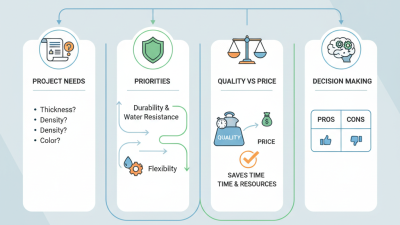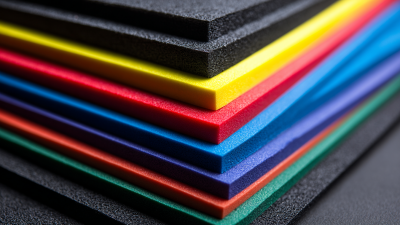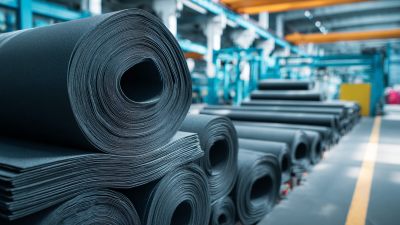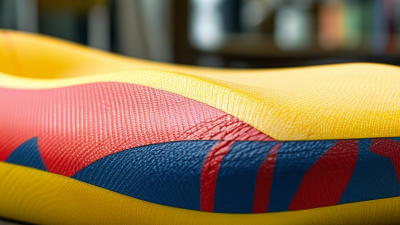
Choosing the China Best High Density EVA Foam Manufacturer requires more than comparing catalog prices. A reliable supplier must prove material consistency, processing control, and application knowledge. High Density Eva Foam should feel firm, resilient, and uniform across the sheet. Its surface should show no unexpected pits, cracks, or weak edges.
Dr. George W. Ehrenstein, a respected polymer materials researcher, offered a useful principle: “Plastic performance must always be judged against its intended application.” This idea matters when selecting Chinese foam manufacturers. A packaging insert needs different compression behavior from a sports mat, shoe component, or protective case. Density alone cannot tell the complete story. It is only one number.
Experienced buyers should request density data, compression-set results, rebound testing, water absorption figures, and aging performance. They should also inspect production samples under real conditions. Press a sample repeatedly. Bend it near the edge. Leave it in a warm, humid room. Small changes may reveal larger quality problems.
Supplier audits also deserve attention. Check laboratory equipment, batch records, traceability systems, and material declarations. Certifications can support confidence, but certificates never replace independent testing. No manufacturer is perfect. Even a strong factory may have inconsistent batches or unclear communication. That risk deserves honest attention.
The best partner combines stable High Density EVA Foam production with responsive engineering support. It understands tolerances, color matching, die cutting, lamination, and export documentation. More importantly, it asks where and how the foam will be used. That question often separates a capable manufacturer from a merely attractive quotation.
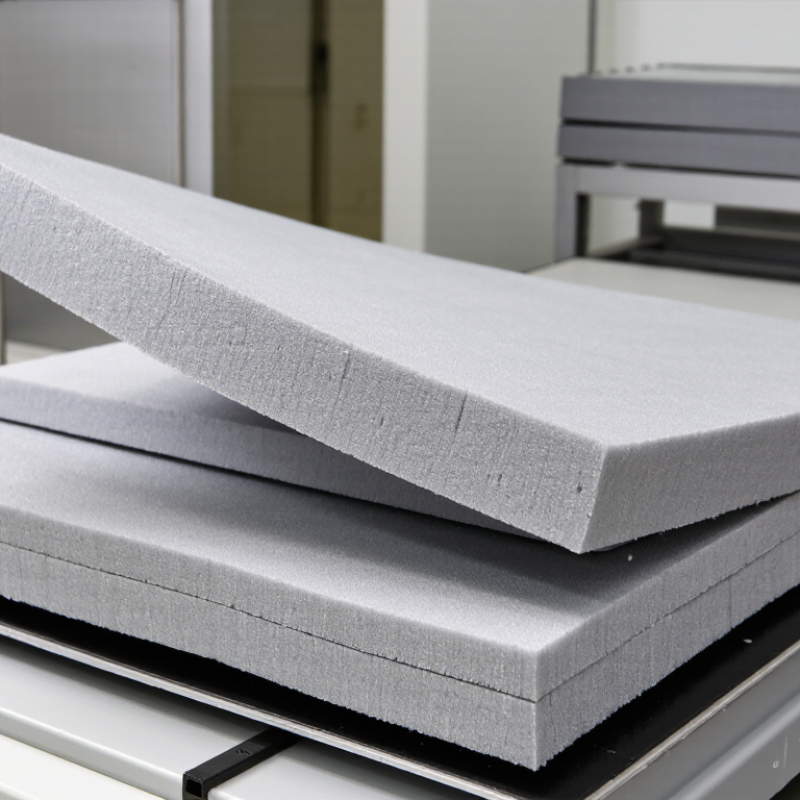
China Best High Density EVA Foam Manufacturer?
High-density EVA foam is commonly defined as material measuring 100–250 kg/m³, or 0.10–0.25 g/cm³. This range describes mass packed into a fixed volume. It does not automatically describe hardness, rebound, or durability. ISO 845:2018 specifies apparent-density testing for cellular plastics and rubber. The measured value depends on sample size, temperature, and conditioning.
A practical working split is 100–150 kg/m³, 150–200 kg/m³, and 200–250 kg/m³. Lower-density sheets usually offer lighter weight and easier compression. Higher-density sheets often provide firmer support, cleaner cutting, and better resistance to repeated loading. ASTM D3575 test methods can help evaluate compression, tensile strength, and water absorption alongside density. Density alone is insufficient.
Here is the important detail. A 220 kg/m³ sheet may still feel soft if its cell structure is flexible. A 130 kg/m³ sheet may feel firm after cross-linking or surface treatment. Technical data reports should therefore show density tolerance, thickness, compression set, and test conditions. Buyers should request batch-level test records, not only a catalog number. The boundary remains useful, but it is not absolute. That deserves careful review.
| Density Class | Density Range (kg/m³) |
Typical Hardness (Shore C) |
Typical Compression Deflection (kPa, 25% compression) |
Typical Tensile Strength (MPa) |
Typical Elongation (%) |
Common Performance Profile | Typical Applications |
|---|---|---|---|---|---|---|---|
| Lower High-Density EVA | 100–149 | 25–45 | 70–180 | 1.5–3.5 | 120–250 | Lightweight structure with improved cushioning, flexibility, and moderate dimensional stability. | Protective packaging, sports padding, footwear components, gaskets, and lightweight inserts. |
| Medium High-Density EVA | 150–199 | 35–55 | 120–300 | 2.0–4.5 | 130–280 | Balanced cushioning, resilience, support, and resistance to repeated compression. | Tool cases, floor mats, kneeling pads, shoe midsoles, sports equipment, and industrial liners. |
| Upper High-Density EVA | 200–250 | 45–70 | 180–450 | 2.5–6.0 | 100–250 | Higher load-bearing capacity, better abrasion resistance, and greater dimensional stability. | Heavy-duty protective packaging, industrial pads, orthopedic components, seals, and structural cushioning. |
Some Chinese EVA foam manufacturers test products under ISO 845 and ASTM D3575. However, testing claims need careful checking. ISO 845 measures apparent density, usually reported in kilograms per cubic metre. ASTM D3575 covers flexible cellular materials made from olefin polymers, including relevant physical performance tests. A reliable supplier should provide complete reports, not only a test logo or a single number.
Ask for the laboratory name, test date, sample identification, conditioning details, and exact test method. Request samples from the same production batch used in testing. During evaluation, measure thickness, surface uniformity, rebound, and compression response. A 40 mm sheet may feel firm at the edges but softer in the centre. That difference can reveal uneven foaming or inconsistent cooling. Experience matters here.
Tips: Compare at least three suppliers. Check whether reports match your requested density and grade. Confirm testing frequency and production controls. Independent laboratory testing adds confidence, especially for large orders. Still, ISO 845 density alone does not prove durability or long-term compression resistance. Some manufacturers may present old reports, and buyers can overlook this detail. A factory visit, video inspection, or pre-shipment test may expose weaknesses before payment. We should also question whether “high density” is being used too loosely. Density is important, but it is not the whole product.
When selecting high-density EVA foam, hardness and tensile strength describe different performance needs. Shore C hardness measures surface resistance to indentation. A 40 Shore C sheet feels resilient and slightly yielding under hand pressure. At 70 Shore C, the foam feels firmer and supports heavier contact loads. The right level depends on cushioning, gaskets, flooring, or protective inserts.
Tensile strength shows how much pulling force the foam can withstand before breaking. A value near 1 MPa may suit light-duty padding with limited stretching. Around 5 MPa offers stronger resistance during pulling, bending, and repeated handling. These figures should not be judged alone. Density, cell structure, thickness, temperature, and aging can change actual performance. Test conditions matter.
In production evaluations, I ask for batch test reports and physical samples. Then I check compression recovery, edge tearing, and dimensional stability. A sample can feel excellent but perform poorly after heat exposure. That surprised me during one comparison. Harder foam was not automatically stronger. Likewise, high tensile strength did not guarantee comfortable cushioning. Small variations between batches also deserve attention, especially near specification limits. A reliable manufacturer should explain testing methods clearly and admit where performance may vary.
Compression set below 15% is a demanding benchmark for high-density EVA foam. It means the material retains most of its thickness after sustained deformation. However, the result is meaningful only when temperature, loading time, thickness, and recovery time are clearly reported. ASTM D395 and ISO 815-1 provide recognized methods for compression-set testing, but they do not create one universal pass level.
Suppliers with reliable control usually provide batch-specific test reports, density records, hardness data, and process traceability. A 2024 Grand View Research assessment estimated the global EVA market at over USD 11 billion in 2023, with continued growth across footwear, packaging, and industrial cushioning. That growth increases supply options, but not every supplier controls rebound performance equally. Ask for compression-set results from several production lots, not one attractive sample.
High-density foam may look stable under a 24-hour test, then perform differently after heat aging. ASTM D395 Method B at 70°C can reveal this weakness. In practical purchasing, a supplier reporting 12–14% compression set under defined conditions deserves closer review. Still, figures below 15% can become misleading when test thickness or recovery time changes. I would also inspect edge collapse, cell uniformity, and thickness recovery after repeated loading. This step is often missed. That is where confidence should remain cautious.
China’s high-density EVA foam market is competitive, but factory claims need physical evidence. A 2024 market assessment by Grand View Research forecasts steady growth in the global EVA foam sector through 2030, increasing pressure on suppliers to prove consistency, not only low pricing. Ask for monthly production records, machine quantities, shift schedules, and recent delivery evidence. A factory tour should show mixing, foaming, curing, cutting, and packing areas in operation.
Capacity must match your order profile. Request samples from three separate production batches. Test density under ISO 845, compression behavior under ISO 3386, and relevant cellular-material properties under ASTM D3575. Compare the laboratory results with the supplier’s technical sheet. Small differences may be acceptable. Large variations suggest weak process control.
Certificates require careful checking. ISO 9001:2015 can indicate a documented quality system, but it does not guarantee perfect foam. Verify the certificate number, scope, issuing body, and expiration date. For restricted-substance requirements, request recent laboratory reports aligned with applicable REACH or RoHS obligations. Do not accept a reused PDF.
Customization should be tested before mass production. Confirm hardness, color, thickness tolerance, surface texture, adhesive compatibility, and mold ownership in writing. Ask for a pilot run and inspect edge quality after cutting. I have seen attractive samples hide unstable production. That risk deserves attention. A supplier that welcomes audits, batch testing, and corrective-action records is usually easier to trust.