Leave Your Message

How to Choose the Best Rubber Foam for Your Needs

Choosing the best Rubber Foam begins with understanding how the material will perform in real conditions. A cushion beside a warm window faces different demands from a sealing strip inside industrial equipment. Density, cell structure, hardness, resilience, compression set, and temperature resistance all influence the final result. Appearance alone can mislead.

John S. Dick, a recognized rubber technologist and author, offers a practical principle: “Testing turns a promising material into a dependable choice.” That idea remains valuable when comparing Rubber Foam products. A sample may feel soft in your hand, yet compress permanently after repeated loading. Another may resist oil and heat but feel too firm for seating. Small differences matter.

Start with the application. Measure the expected load, movement, moisture, chemicals, and operating temperature. Check whether the foam must absorb vibration, block air, reduce noise, or provide comfort. Then compare technical data from manufacturers, including compression deflection and long-term aging results. Ask for test samples.

Test it properly.

Place the sample under realistic pressure. Expose it to the temperatures and fluids it may encounter. Record thickness loss after repeated compression. This process is not flawless. Laboratory results cannot reproduce every workplace condition, and supplier data may use different test methods. That uncertainty deserves attention.

The best Rubber Foam is not always the softest, cheapest, or highest-density option. It is the material that balances performance, service life, safety, and total cost. Careful selection takes time. It can prevent costly replacement later.

How to Choose the Best Rubber Foam for Your Needs

Define Rubber Foam and Its Main Performance Characteristics

Rubber foam is a flexible elastomeric material containing many small air cells. These cells may be open, closed, or partly connected. The structure affects how the foam handles moisture, pressure, sound, and heat. Unlike ordinary sponge foam, rubber foam can recover after repeated compression. It also remains flexible across a useful temperature range, depending on its formulation.

Density is an important starting point, but it does not tell the whole story. Compression resistance shows how much force the foam needs under load. Compression set indicates whether it stays permanently flattened after long pressure. Low compression set is valuable for seals and gaskets. Resilience describes how quickly the foam returns to shape. Better rebound can help with vibration control, although excessive rebound may reduce stability.

Moisture behavior deserves close attention. Closed-cell foam usually absorbs less water and works better around condensation. Open-cell foam may provide softer cushioning and improved sound absorption. Thermal conductivity, aging resistance, and surface durability also influence service life. In practical evaluations, samples should face the real temperature, pressure, and cleaning conditions. A foam that feels perfect by hand may fail after months of compression. That is easy to miss. Small differences in thickness or cell structure can change performance. Product data should be checked against independent test methods, not only supplier descriptions.

How to Choose the Best Rubber Foam for Your Needs

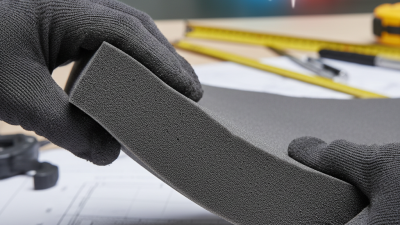
Rubber foam is a flexible cellular elastomer containing many small air-filled cells. Its performance depends on the polymer type, cell structure, density, and formulation. Temperature resistance is one of the most important selection factors.

The chart shows representative continuous service-temperature ranges commonly associated with closed-cell rubber foam families. Actual limits vary with grade, density, exposure time, compression, and aging. Silicone foam generally provides the widest temperature range, while natural rubber foam is better suited to moderate-temperature applications requiring high elasticity.

Identify Your Application’s Environmental and Functional Requirements

How to Choose the Best Rubber Foam for Your Needs

Identify Your Application’s Environmental and Functional Requirements

Start with the environment. A chilled-water pipe in a coastal plant faces moisture, salt air, vibration, and temperature cycling. Select closed-cell rubber foam only after checking operating temperature, humidity, UV exposure, ozone, and maintenance access.

The 2024 Global Status Report for Buildings and Construction, published by UNEP and IEA, reports that buildings consume about 32% of global energy. Small insulation failures can therefore create persistent energy waste, not merely cosmetic damage.

Match performance to the service.

For cold systems, examine thermal conductivity, water-vapor resistance, and joint-sealing details. ISO 8497 and ASTM C177 or C518 provide recognized methods for measuring insulation heat transfer.

Do not compare values from different test temperatures. That shortcut is common, and sometimes wrong. A material tested near room temperature may perform differently around a cold pipe.

For hot equipment, verify continuous service range, shrinkage, compression recovery, and surface temperature.

Fire behavior also needs evidence.

Use applicable classifications under EN 13501-1 or methods such as ASTM E84, then confirm project requirements. Check smoke development, flame spread, and installation thickness.

For outdoor applications, request data on UV, ozone, water absorption, and weathering. Inspect samples after cycling, not only before installation.

A practical trial section may reveal crushed cells or open seams.

Poor closure can defeat good foam.

Compare Rubber Foam Types, Densities, and Cell Structures

Rubber foam selection begins with its cell structure. Open-cell foam lets air move through connected pores. It feels softer and can absorb sound, but it may hold moisture. Closed-cell foam resists water and provides stronger insulation. Its surface feels firmer under pressure. Some blended structures offer a practical middle ground, although performance can vary between batches.

Density changes how foam behaves in real use. Low-density foam is light, flexible, and easy to cut. It suits cushioning, packaging, and light sealing. Medium-density grades provide a better balance for seats, gaskets, and vibration control. High-density foam supports heavier loads and usually recovers more slowly. Do not assume higher density always means better performance. It can add weight, cost, and unwanted stiffness.

Type matters too. Neoprene foam handles weather exposure well. EPDM foam performs reliably against heat, ozone, and sunlight. Nitrile foam is useful where oil resistance matters. Silicone foam tolerates wider temperatures, but it may need careful compression testing. A common mistake is comparing density alone. Measure compression set, tensile strength, temperature range, and moisture behavior. Test a small sample under the actual load. That step is easy to skip. It should not be.

How to Choose the Best Rubber Foam for Your Needs – Compare Rubber Foam Types, Densities, and Cell Structures

Rubber Foam Type Typical Cell Structure Typical Density Range Temperature Range* Key Performance Characteristics Main Advantages Typical Limitations Common Applications
Natural Rubber Foam Predominantly open-cell; may be produced as latex foam with interconnected pores. 65–200 kg/m³
(4.1–12.5 lb/ft³)
Approximately −40 to +80°C
(−40 to +176°F)
High elasticity, resilience, tensile strength, and fatigue resistance; good vibration absorption. Excellent rebound and comfort; renewable feedstock option; pleasant cushioning feel. Limited resistance to ozone, UV, oils, and many solvents; possible sensitivity for people with natural rubber latex allergy. Mattresses, seating cushions, vibration pads, footwear, packaging, and general cushioning.
EPDM Rubber Foam Usually closed-cell, with fine and relatively uniform cells for sealing and moisture resistance. 80–250 kg/m³
(5.0–15.6 lb/ft³)
Approximately −50 to +150°C
(−58 to +302°F)
Excellent resistance to weathering, ozone, water, steam, and dilute acids and alkalis. Long outdoor service life; low water absorption; reliable weather and temperature performance. Poor resistance to petroleum oils, fuels, and many hydrocarbon-based fluids. Outdoor gaskets, HVAC seals, automotive weather seals, roofing details, pipe insulation, and marine applications.
Neoprene (CR) Foam Commonly closed-cell; available in fine-cell grades for sealing, cushioning, and insulation. 100–300 kg/m³
(6.2–18.7 lb/ft³)
Approximately −35 to +105°C
(−31 to +221°F)
Balanced resistance to weathering, ozone, moderate oils, flame, and abrasion; good flexibility. Versatile all-purpose sealing and cushioning material; good dimensional stability. Higher cost than some general-purpose elastomers; not ideal for prolonged contact with fuels or aromatic solvents. Gaskets, expansion joints, protective padding, wetsuit components, equipment mounts, and vibration isolation.
Nitrile (NBR) Foam Typically closed-cell, with cell size selected according to sealing, insulation, or cushioning needs. 90–250 kg/m³
(5.6–15.6 lb/ft³)
Approximately −30 to +105°C
(−22 to +221°F)
Very good resistance to mineral oils, greases, fuels, and many hydraulic fluids; good compression sealing. Preferred where oil and fuel resistance is more important than outdoor weathering. Weaker resistance to ozone, sunlight, and weathering than EPDM; performance varies with formulation. Automotive seals, oil-resistant gaskets, machinery padding, fuel-system components, and industrial insulation.
Silicone Rubber Foam Closed-cell or sponge structure; can be manufactured with uniform fine cells for hygienic sealing. 120–350 kg/m³
(7.5–21.8 lb/ft³)
Approximately −60 to +200°C
(−76 to +392°F)
Outstanding high- and low-temperature flexibility; good resistance to UV, ozone, moisture, and aging. Wide service-temperature range; low odor; suitable for demanding environmental and hygienic applications. Lower tear and abrasion resistance than many organic rubbers; generally higher material cost. Oven and furnace seals, medical equipment, food-processing equipment, electronics, and high-temperature gaskets.
Polyurethane (PU) Foam Open-cell or closed-cell; open-cell grades provide airflow and cushioning, while closed-cell grades improve sealing and buoyancy. 25–300 kg/m³
(1.6–18.7 lb/ft³)
Approximately −40 to +100°C
(−40 to +212°F)
Wide hardness range; good energy absorption, abrasion resistance, and load-bearing capability. Lightweight; easy to customize; available in soft, semi-rigid, and rigid forms. Some grades are sensitive to hydrolysis, UV, heat, or certain chemicals; open-cell grades absorb moisture. Seat cushions, acoustic absorption, packaging, impact protection, filtration, insulation, and energy-management components.
Selection guide: Choose closed-cell foam when moisture resistance, buoyancy, thermal insulation, or airtight sealing is important. Choose open-cell foam when airflow, softness, acoustic absorption, or high cushioning comfort is the priority. Higher density generally improves load-bearing capacity and durability, but it can also increase weight and cost. Actual performance depends on formulation, hardness, cell size, compression set, thickness, and manufacturing process.
*Temperature ranges are representative service ranges for common grades, not universal specifications. Always verify the technical data sheet for the exact material and operating conditions.

Evaluate Durability, Safety, Installation, and Maintenance Needs

How to Choose the Best Rubber Foam for Your Needs

Rubber foam should match the environment, not just the product description. Check expected temperatures, moisture exposure, compression, and daily movement before selecting a grade. A foam used beneath machinery may need stronger recovery than foam used inside a quiet office wall. Look for test data covering density, compression set, tear strength, and aging. These figures reveal more than a smooth surface. Safety also matters. Confirm resistance to heat, smoke, chemicals, and ignition when the application requires it. For skin contact, review odor, irritation, and material safety information. A quick visual check helps, but it can miss hidden weaknesses.

Installation affects performance immediately. Measure the surface carefully, then cut with a sharp blade for clean edges. Remove dust, oil, and moisture before applying adhesive or mechanical fasteners.

Uneven pressure can create gaps, wrinkles, or early compression damage. Allow room for expansion around warm equipment. In practical inspections, many failures come from poor preparation rather than weak foam. That is easy to overlook. Maintenance should include periodic checks for cracking, hardening, water absorption, loose joints, and shape loss. Replace damaged sections before they affect surrounding components.

Tips: Request samples and test them under actual conditions. Compress a small piece repeatedly, expose another to expected moisture, and inspect both after several days. Record temperature, load, and installation method. If results vary, pause and investigate. A cheaper option may still work, but assumptions should not replace testing. Review technical documents with a qualified installer when safety-critical performance is involved.

Select the Best Rubber Foam Based on Performance and Overall Value

How to Choose the Best Rubber Foam for Your Needs

Selecting rubber foam should begin with performance, not the lowest purchase price. In practical insulation and sealing projects, I examine temperature exposure, compression, moisture, and expected service life. A material that feels soft in the warehouse may lose shape after months of pressure.

Measure the real working conditions. Check the temperature range, chemical contact, vibration, and sunlight exposure. Closed-cell foam often helps limit water absorption, while flexible grades can handle repeated movement. Density matters, but higher density does not automatically mean better value. It may improve support yet increase cost and reduce flexibility.

Request technical data and, when possible, test a small sample. Compress it repeatedly, inspect recovery, and compare thickness after several days. This simple check can reveal problems that a product sheet misses. I once underestimated installation difficulty because the foam looked suitable on paper. The result was extra cutting and wasted material.

Consider total cost rather than price per sheet. Include labor, replacement frequency, energy performance, and disposal needs. A slightly more expensive foam may reduce maintenance and installation time. However, paying more without verified performance is also a mistake. Ask for independent test evidence, clear tolerances, and consistent batch quality. Reliable suppliers should explain limitations, not promise perfection.