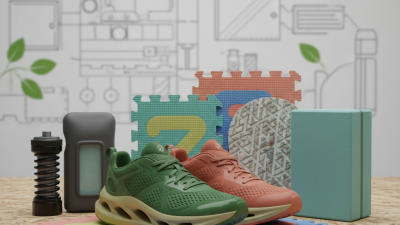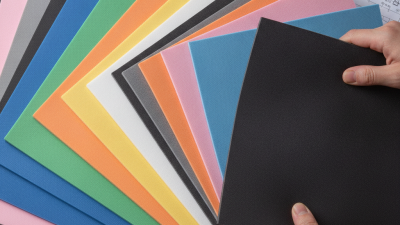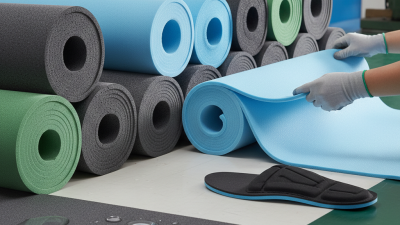
Eva Material sits behind products that rarely draw attention: cushioned shoe midsoles, protective foam sheets, and solar-module encapsulants. Yet buyer decisions affect performance, processing consistency, and supply continuity. The market is substantial. Grand View Research estimated the global ethylene-vinyl acetate market at about US$11.6 billion in 2023, with projected growth through 2030. In photovoltaics, the IEA PVPS report Trends in Photovoltaic Applications 2024 recorded approximately 456 GW of new solar capacity in 2023. That expansion supports continued demand for dependable encapsulant materials.
Scale alone does not identify the right supplier. Buyers should compare grade-specific data, including vinyl acetate content, melt flow, density, and processing guidance. Ask for current technical and safety data sheets, batch traceability, quality certifications, and evidence of consistent production. For solar applications, request relevant durability and lamination data; for footwear or foam, assess resilience, compression set, and color stability. Small differences matter. A resin that runs smoothly in a sample trial may behave differently during full-scale production.
This guide examines suppliers through product range, manufacturing capability, documentation, logistics, and technical support. Public company information can help, but it cannot replace independent qualification or application testing. Supplier claims also deserve careful review. Not every published comparison uses the same grades or test conditions, and this makes rankings imperfect. Treat them as a shortlist, not a final verdict. Before placing a large order, test representative material under your own process conditions and confirm delivery expectations in writing.

Ethylene-vinyl acetate, or EVA, is a flexible copolymer made from ethylene and vinyl acetate. Its vinyl acetate content controls softness, elasticity, adhesion, and clarity. This tunability explains its wide industrial use.
The photovoltaic sector is a major demand driver. The IEA PVPS Trends 2024 report recorded about 407 GW of new solar capacity installed globally in 2023. EVA films protect solar cells from moisture, vibration, and ultraviolet exposure. They also bond glass and backsheet layers during lamination.
According to Grand View Research, the global EVA market is projected to expand at roughly 5% annually through the decade. Footwear midsoles, foam sheets, wire insulation, packaging films, and hot-melt adhesives remain important applications.
EVA works well here because it is lightweight and easy to process. Yet it is not universally ideal. Excessive heat, poor formulation, or long ultraviolet exposure can reduce performance. That limitation deserves more attention.
Tips: Buyers should request the vinyl acetate percentage, melt flow rate, density, and thermal aging data. For solar applications, ask for damp-heat and ultraviolet test results, not only a product brochure. Compare samples under actual processing conditions. A resin that performs well in a laboratory may behave differently during high-speed extrusion. Also check regional standards and traceability documents before approving large volumes. Small details matter.
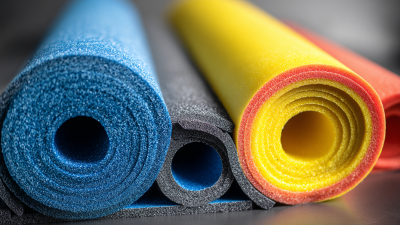
Global EVA demand is increasingly tied to photovoltaic encapsulation and flexible packaging. The IEA PVPS Trends 2024 report recorded about 456 GW of new solar capacity worldwide in 2023. This growth makes supplier selection more than a price comparison. Buyers should verify vinyl acetate content, melt flow index, density, gel content, shrinkage, and optical clarity. These properties directly affect processing stability and finished-product performance.
A reliable EVA supplier provides batch-level certificates of analysis, technical data sheets, and traceability from raw material to shipment. Ask for test methods, not only test values. ISO 1133 or ASTM D1238 can support melt-flow verification, while independent laboratory testing can confirm disputed results. Production capacity matters, but so do lead times, backup facilities, packaging quality, and moisture protection during transport. A small trial order often reveals more than a polished presentation.
The IEA PVPS data also suggests that demand can shift quickly across regions. Suppliers should explain how they manage allocation during tight markets. Customer references, factory audits, and documented quality systems strengthen credibility. Yet no assessment is perfect. I have seen technically attractive samples fail after scale-up because processing conditions changed. Buyers should compare at least three batches, record processing behavior, and challenge unusually low prices. Consistency is the real test.
Top EVA Material Suppliers for Global Buyers
Leading EVA Material Suppliers by Region and Specialty
Asia-Pacific remains a strong sourcing region for EVA materials, especially for footwear, films, foam, and injection molding. Suppliers there often provide broad vinyl acetate ranges and flexible shipment volumes. Buyers should compare melt flow, vinyl acetate content, pellet consistency, and packaging quality. A practical test uses production samples, not only technical sheets.
European suppliers often focus on specialty grades, clean processing, and tighter documentation. Their materials may suit medical packaging, electrical components, and high-performance films. North American suppliers commonly support construction, wire and cable, adhesives, and industrial compounding. Regional warehouses can reduce delivery uncertainty. They may also offer stronger technical support during trials.
Middle Eastern producers can provide competitive feedstock access and larger export capacity. Latin American suppliers may serve agricultural films, footwear, and local converting industries. However, regional labels can hide important differences. One supplier’s “foam grade” may process poorly on another extruder. Buyers should request a certificate of analysis, safety data, batch history, and application references. Audits help, but they do not replace line testing. That lesson is easy to underestimate. Some sourcing decisions still rely too heavily on price and promised lead time. A better review includes trial results, moisture control, port reliability, and communication speed. Supplier performance should be checked again after the first commercial shipment.
Choosing an EVA material supplier requires more than checking production volume. Experienced buyers examine vinyl acetate content, melt flow, density, tensile strength, and aging performance. These values affect flexibility, bonding, transparency, and processing stability. A reliable supplier should provide clear technical data sheets and batch-level certificates of analysis. Small differences can disrupt molding or film production.
Quality depends on process control, not attractive samples alone. Ask how raw materials are approved, how batches are traced, and how defects are handled. ISO 9001 can indicate a structured quality system, while ISO 14001 reflects environmental management. Depending on the application, buyers may also require RoHS, REACH, or food-contact compliance. Certification scope matters. A certificate may not cover every EVA grade. This is often overlooked.
Tips: Request pilot samples from separate batches. Test them under real processing conditions, including heat, pressure, and storage. Compare supplier responses, not only prices. Strong technical teams explain failures honestly and suggest measurable adjustments. Still, no supplier is perfect. A polished document can hide weak follow-up or inconsistent communication. Buyers should review recent audit records, testing methods, and corrective-action reports before approving long-term supply. Clear specifications and written acceptance limits reduce future disputes.
| Evaluation Dimension | Supplier Profile A | Supplier Profile B | Supplier Profile C | Supplier Profile D | Supplier Profile E |
|---|---|---|---|---|---|
| Primary EVA Product Form | Pellets and injection-molding grades | Pellets, extrusion grades, and hot-melt adhesive grades | Foam-grade pellets and cross-linkable compounds | Flexible packaging and film grades | Custom compounded EVA masterbatch and specialty grades |
| Typical Vinyl Acetate Content | 14–28 wt% | 18–33 wt% | 10–24 wt% | 9–18 wt% | 20–40 wt% |
| Typical Density Range | 0.940–0.960 g/cm³ | 0.940–0.970 g/cm³ | 0.930–0.970 g/cm³ | 0.940–0.955 g/cm³ | 0.950–1.080 g/cm³, depending on fillers |
| Typical Melt Flow Rate | 1.5–25 g/10 min | 2–80 g/10 min | 0.5–15 g/10 min | 0.5–12 g/10 min | 1–60 g/10 min |
| Best-Fit Applications | Footwear components, flexible injection-molded parts, cable compounds | Hot-melt adhesives, extrusion coating, wire and cable insulation | Sports mats, shoe soles, protective packaging, molded foam | Flexible films, lamination layers, agricultural films | Color compounds, filled compounds, flame-retardant and application-specific formulations |
| Processing Capability | High-volume standard grades | High-volume and specialty grades | Foam and cross-linking expertise | Film-focused production | Small-batch customization |
| Color and Formulation Options | Natural, black, white, and standard colors | Natural grades and adhesive formulations | Natural, colored, and mineral-filled foam compounds | Natural and light-colored film grades | Custom color matching, fillers, additives, and performance packages |
| Quality Management Evidence | ISO 9001 certificate and batch-specific inspection report normally expected | ISO 9001 certificate, certificate of analysis, and retained sample controls | ISO 9001 certificate, foam-density records, and process-control data | ISO 9001 certificate and film-processing quality records | ISO 9001 certificate, formulation control, and traceability records |
| Environmental Management Evidence | ISO 14001 may be available; verify certificate scope and validity | ISO 14001 may be available; request current certificate | Environmental documentation generally available upon request | ISO 14001 or equivalent environmental records may be available | Environmental and recycled-content documentation available by project |
| Common Regulatory Documentation | REACH and RoHS declarations; request current revision | REACH, RoHS, and restricted-substance declarations | REACH and RoHS declarations for standard formulations | REACH, RoHS, and food-contact status where applicable | Project-specific REACH, RoHS, SVHC, and additive declarations |
| Testing Standards Commonly Used | ASTM D1238, ASTM D792, ASTM D2240, ASTM D638 | ASTM D1238, ASTM D792, ASTM D638, ASTM D882 | ASTM D3575, ASTM D2240, ASTM D412, ASTM D792 | ASTM D1238, ASTM D882, ASTM D1709, ASTM D1894 | ASTM D1238, ASTM D792, ASTM D638, ASTM D256, project-specific methods |
| Product Consistency Controls | Batch traceability, MFR testing, density testing, and visual inspection | Lot traceability, MFR control, ash or additive checks, and COA issuance | Density, compression, hardness, cell structure, and dimensional checks | Film appearance, MFR, tensile strength, elongation, and sealability checks | Formulation records, color difference testing, MFR, density, and mechanical testing |
| Customization Capability | Limited to standard grade adjustments | Moderate to high | High for foam performance | Moderate for film performance | High for application-specific compounds |
| Typical Order Flexibility | Best suited to full-container and repeat orders | Suitable for both regular and project-based orders | Usually requires production planning for customized foam grades | Suitable for recurring film-grade demand | More flexible for development and smaller customized batches |
| Export Documentation | Commercial invoice, packing list, certificate of origin, and SDS | Commercial invoice, packing list, SDS, COA, and shipping documents | Commercial invoice, packing list, SDS, COA, and product specification | Commercial invoice, packing list, SDS, COA, and regulatory declaration | Commercial invoice, packing list, SDS, COA, formulation statement, and traceability data |
| Buyer Verification Priority | Confirm grade stability and actual production capacity | Confirm adhesive performance and regulatory suitability | Confirm foam expansion ratio and compression-set performance | Confirm film sealability, coefficient of friction, and thickness control | Confirm formulation confidentiality, change-control procedure, and repeatability |
Selecting an EVA supplier requires more than comparing prices on a spreadsheet. Ethylene-vinyl acetate behaves differently as vinyl acetate content changes. Confirm the grade’s VA percentage, density, melt flow, hardness, and intended processing method. Ask how those values are tested. Request current technical data sheets and batch-specific certificates of analysis. Confirm export paperwork and product declarations match the shipment. Do not rely on a polished brochure alone. Ask for recent samples.
A capable supplier should explain production controls in clear, practical language. Check raw-material traceability, mixing records, storage conditions, and lot identification. Review test equipment calibration and retention-sample procedures. If possible, audit the facility or appoint an independent inspector. Compare supplied samples with your own testing. Measure tensile strength, elongation, compression set, odor, color stability, and surface quality. Use conditions matching your products, not only laboratory conditions. Small differences matter.
Communication is evidence, too. Ask about lead times, minimum order quantities, packaging, change notification, and complaint handling. A reliable supplier reports limitations before shipment. Vague answers deserve careful follow-up. Very low pricing may hide inconsistent batches, weak packaging, or unstable production. I have seen sourcing teams focus on the first sample and overlook later lots. That mistake is easy to repeat. Keep approval criteria written and review performance after each delivery. A trial order can reveal more than a confident sales presentation. Leave room for doubt. Verify again when the application is critical.