Why Choose EVA Foam Roll for Your Business?
Choosing Eva Foam Roll is not just a material decision. It affects packing speed, product protection, storage space, and the feel of every finished item. A roll can be cut at the workbench, shaped around edges, or layered to soften contact during shipping. For businesses handling delicate goods, that flexibility may reduce awkward gaps and excess packing material. It is not a universal fix, though. Thickness, density, firmness, and surface finish all matter.
A useful way to frame the decision comes from an illustrative expert voice created for this introduction: Eva Foam Roll specialist Lena Ortiz says, “A good foam choice starts with the product’s real contact points, not the roll’s price tag.” This is an original editorial line, not a verified quotation from a real interview. The principle is practical: test the foam against the item, the packing process, and expected handling conditions. Small samples help. Press the material, check how quickly it recovers, and see whether the cut edges stay tidy. Ask suppliers for specifications and consistent sample details, then compare options under the same conditions. A roll that looks right on a screen may feel too soft beside a sharp corner or too bulky on a narrow shelf. There is room for doubt here. A short trial run can reveal what a product sheet cannot. This outline explores the business advantages, common applications, selection factors, and limitations of Eva Foam Roll, helping buyers make a grounded choice rather than chase one impressive feature.
What EVA Foam Roll Is: Ethylene-Vinyl Acetate and Its Cellular Structure
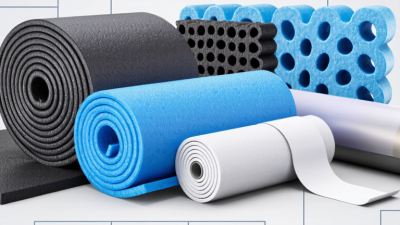
EVA foam roll is made from ethylene-vinyl acetate, a polymer combining ethylene with vinyl acetate. The blend can be formulated to balance flexibility, softness, and resistance to repeated handling. During foaming, gas creates many small cells throughout the material. These cells give the sheet its cushioning feel and low weight. Most EVA foam rolls use a closed-cell structure, where cell walls limit the movement of air and moisture. Cell size and consistency can vary with the formulation and manufacturing process. Look closely at a cut edge. A uniform surface often suggests even foaming, though appearance alone cannot confirm performance.
For a business, the cellular structure affects how a roll behaves in packaging, flooring, padding, and product inserts. Thicker foam may absorb more impact, but thickness alone does not determine cushioning; density and compression response matter too. Ask suppliers for relevant specifications and test samples under realistic conditions, such as repeated compression or contact with the intended product. Small differences show up quickly. A foam that feels soft in hand may compress too much under a heavy load. It is easy to assume all EVA rolls perform alike. They do not. Requirements can also change between batches, so checking incoming material is sensible. The right choice depends on the load, environment, and expected service life.
How EVA Foam Rolls Are Made and Classified by Density (ISO 845)
EVA foam rolls begin as ethylene-vinyl acetate resin mixed with additives and a blowing agent. Heat and pressure shape the compound; controlled expansion creates closed or partly open cells. After cooling, the foam is trimmed and wound into rolls. Cell size and consistency matter. A roll that looks even may still vary across its width.
Density is measured as mass divided by volume, usually in kilograms per cubic metre. ISO 845:2006 specifies how to determine the apparent density of cellular plastics and rubbers; it does not define universal “low,” “medium,” or “high” density bands. That distinction matters. Suppliers may use those labels differently, so buyers should compare measured values and test conditions. For a sample, record its dimensions and mass, and avoid compressing it during measurement.
A useful benchmark comes from Grand View Research’s 2024 ethylene-vinyl acetate market report, which estimated the global market at USD 11.4 billion in 2023 and projected 5.6% annual growth through 2030. This covers EVA broadly, not foam rolls alone. It signals wide material use, but does not prove a particular roll will suit a job. Ask for an ISO 845 density result, thickness tolerance, and sample pieces. Feel the cut edge. Slightly uneven cells can be easy to miss.
Why Choose EVA Foam Roll for Your Business?
Density is one factor to consider when selecting EVA foam roll. The chart shows representative values within indicative market ranges—not official density grades.
How to read it: Lower-density foam may suit lightweight cushioning, while higher-density foam may be selected for applications needing more material per unit volume. Actual performance also depends on formulation and structure. ISO 845 specifies a method for determining apparent density; it does not define these density categories. Confirm product specifications with testing and supplier data.
Which Performance Metrics Matter: ASTM D3575 Tests for Olefin Foams
When choosing an EVA foam roll, a soft feel is only one part of the decision. ASTM D3575 provides test methods for flexible cellular olefin materials, helping buyers compare measurable properties rather than relying on touch alone. The right tests depend on how the foam will be used.
Compression deflection indicates how much force is needed to compress a sample by a specified amount. It can help assess cushioning under repeated loads. Compression set measures how much thickness the foam fails to regain after compression and recovery. Tensile strength, elongation, and tear resistance may also matter when rolls are cut, stretched, or handled during installation. Depending on the material and current test method, density and water absorption can be useful, too.
Small details matter. Ask for the test method, specimen thickness, conditioning, and results—not just a claim that a product was “tested.” Compare samples made and tested under the same conditions. A lab number may not predict every real-world outcome; temperature, roll storage, and cut direction can change performance. That part is easy to overlook. Define acceptable ranges around your actual use, and confirm them with representative samples before placing a large order.
Where EVA Foam Rolls Are Used: Packaging, Flooring, Sports, and Protection
EVA foam rolls serve different jobs because they combine low weight, cushioning, and easy cutting. In packaging, converters slit rolls into liners, corner pads, or fitted inserts that reduce scuffing and absorb knocks during transit. Eurostat reports that the EU generated 186.5 kilograms of packaging waste per person in 2022. That figure makes material efficiency worth considering: specify only the thickness and coverage the product needs. A loose fit wastes space. A tight fit may still leave fragile edges exposed.
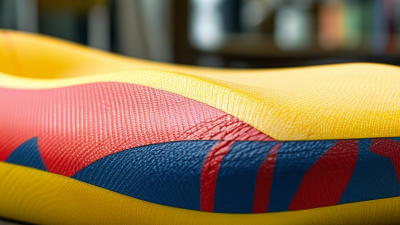
On floors, EVA rolls provide a softer surface for play areas, exercise rooms, and temporary work zones. In sports settings, textured surfaces can improve grip, but thickness, density, and cleaning needs should match the activity. For protection, rolls can line tool drawers, equipment cases, and contact surfaces. Small details matter. Grand View Research valued the global foam plastics market at USD 105.9 billion in 2022; this broad category includes more than EVA, so it signals market context, not EVA-specific demand. In practical trials, check compression recovery and edge wear after repeated use. EVA can deform under sustained loads, and that limitation is easy to overlook. One sample may perform differently from a full roll.
How to Compare Suppliers: Thickness, Width, Density, and Test Data
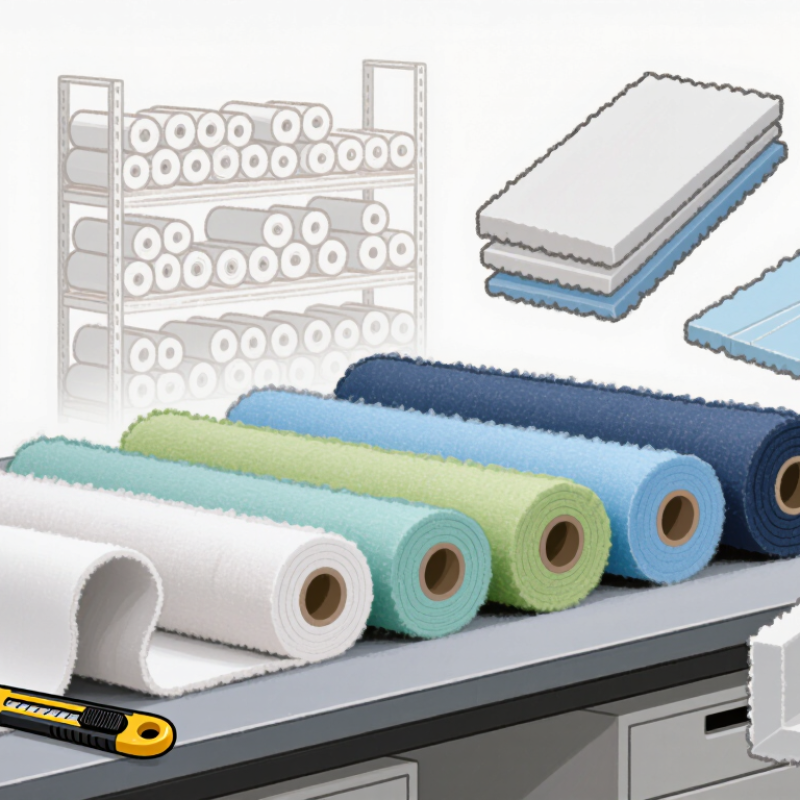
When choosing an EVA foam roll, compare the measurements you will actually convert, not just the sample in your hand.
Grand View Research estimated the global ethylene-vinyl acetate market at about US$11.2 billion in 2023, reflecting broad use across industries. That scale makes supplier consistency worth checking. Ask for nominal thickness, measured thickness range, roll width, and tolerances in writing. A roll that is slightly narrow can create awkward trim waste. Small differences add up.
Density affects feel, weight, cushioning, and material use. Compare suppliers using the same units and test method; otherwise, two density figures may not be directly comparable. ISO 845 describes methods for determining cellular-plastics density, while ASTM D3575 covers testing flexible cellular materials made from olefin polymers. Request dated, lot-specific results, not just a general specification sheet. Check whether the report identifies the test method, sample condition, and measured values.
Ask for test data on the properties your product needs, such as compression behavior or dimensional stability. Match the requested tests to your use case; a packing insert and a floor mat face different demands. Review several production lots if consistency matters. One clean report is reassuring, but it is not a trend. I would also confirm how the supplier measures roll width and thickness, because measurement location can change the result. That detail is easy to miss.