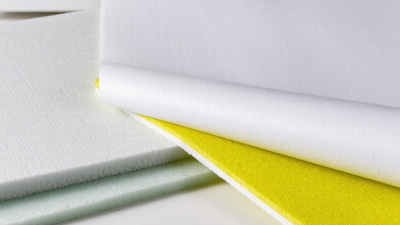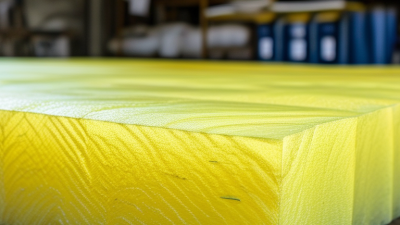
Leave Your Message
Adhesive EVA Foam Sheets are used in packaging, cushioning, sealing, and product assembly. For global buyers, choosing a China-based supplier involves more than comparing price lists. Foam density, thickness, adhesive type, liner, and sheet dimensions can all affect fit and performance. A sample that looks right may behave differently after cutting or application.
Reliable sourcing starts with clear specifications. Buyers should share drawings, operating conditions, expected quantities, and any relevant performance requirements. They can then ask suppliers about material options, production controls, inspection methods, and sample approval. Practical details matter: a cleanly cut edge, consistent thickness, and adhesive that bonds to the intended surface. Small variations can create costly rework.
Ask for evidence, not just promises. Product data, test results, and documented quality procedures help buyers assess whether a supplier can meet their needs. Communication also deserves attention. A clear response about lead times or customization is more useful than a broad assurance. Still, no single supplier suits every application. Cost, consistency, customization, and delivery may involve trade-offs, and buyers should verify them before placing a large order.
This guide explores how international buyers can evaluate Chinese manufacturers, compare specifications, request samples, and build a dependable sourcing process. It also considers questions worth asking before production begins. Some details are easy to overlook. That is where careful review helps.
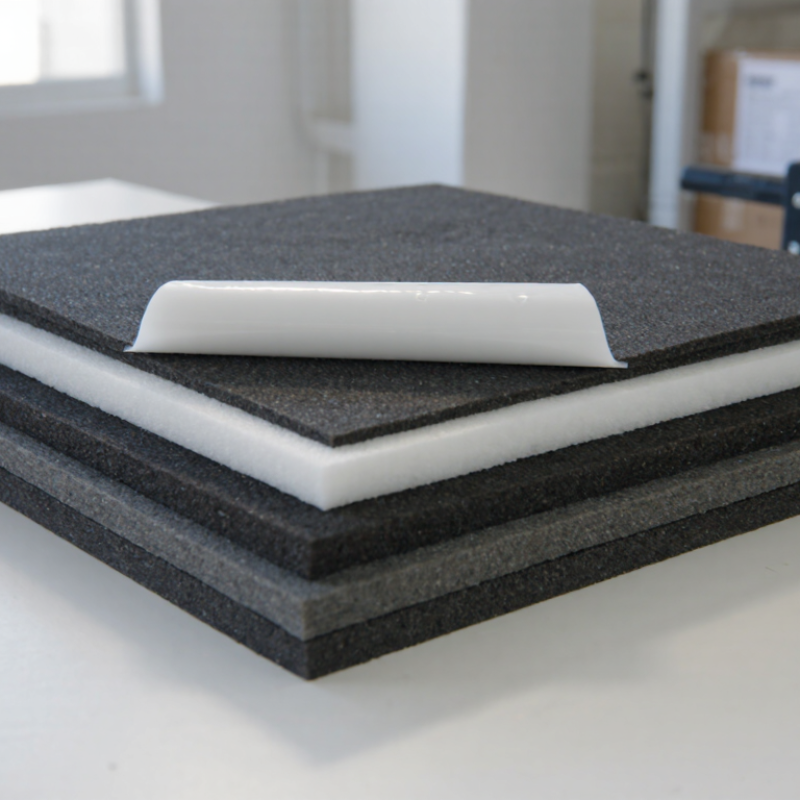
Adhesive EVA foam sheets combine a flexible foam core with pressure-sensitive adhesive on one side. EVA means ethylene-vinyl acetate, a material valued for cushioning, low weight, and easy cutting. The foam may have a closed-cell structure, with tiny cells that limit water absorption compared with open-cell foam. Exact performance depends on formulation and density. A sheet can feel soft yet still resist compression differently from a denser grade.
The layers are simple, but each has a job. The EVA core provides cushioning and spacing. The adhesive layer bonds the sheet to a clean surface, while a release liner protects the adhesive before use. Peel back the liner, and the tacky surface is ready to apply. Small details matter: uneven coating or dust on the substrate can weaken contact. That is easy to overlook.
For buyers, thickness, density, adhesive type, and liner material should be checked against the intended use. A thin sheet may suit a narrow gap; a thicker one can absorb more impact, though it may compress under steady load. Ask for sample sheets and test them on the actual surface. Check the bond after application, not just by touch. One limitation is worth noting: “strong adhesive” alone tells little without surface, temperature, and load conditions. The right construction is specific, and sometimes the first choice needs revisiting.
A practical overview of the materials, construction, common specifications, and selection factors for adhesive-backed EVA foam sheets.
| Category | Typical Construction or Range | Function and Selection Notes |
|---|---|---|
| Foam core | Ethylene-vinyl acetate (EVA) foam, commonly produced as a flexible, closed-cell material. | Provides cushioning, spacing, and surface protection. Foam firmness and resilience vary by formulation and manufacturing process. |
| Adhesive layer | A pressure-sensitive adhesive (PSA) is applied to one face. Acrylic and rubber-based adhesive systems are commonly used. | Acrylic PSAs are often selected for aging and temperature-resistance needs; rubber-based PSAs can offer strong initial tack. Suitability depends on the surface and service conditions. |
| Release liner | A removable paper or film liner covers the adhesive before installation. | Protects the adhesive during storage and handling. The liner is peeled away immediately before bonding. |
| Layer arrangement | Release liner → pressure-sensitive adhesive → EVA foam core | This is a common single-sided construction. Double-sided versions have adhesive on both faces and may use a liner between or over the adhesive surfaces. |
| Foam thickness | Common sheet options range from approximately 1 mm to 25 mm; other thicknesses may be available. | Thinner foam can suit spacing and light cushioning, while thicker foam can provide more compression travel. Confirm thickness tolerance with the product specification. |
| Sheet format | Supplied as sheets, rolls, strips, or converted parts; dimensions depend on the order and production capability. | Sheet size should be selected around the application, packaging, and cutting process. Die cutting or slitting can be used to make custom shapes and sizes. |
| Foam properties | Density, hardness, color, cell structure, and compression behavior vary by grade. | Request defined test methods and tolerances when comparing materials. A single property value should not be assumed to apply to every EVA foam grade. |
| Common uses | Gaskets, cushioning pads, spacers, protective packaging, anti-scratch pads, and mounting applications. | Choose the foam and adhesive together based on load, surface texture, temperature, moisture exposure, and expected service life. |
| Bonding surfaces | Adhesion depends on the substrate, including its surface energy, cleanliness, texture, and coating. | Clean and dry the surface before application. Test adhesion on the actual substrate, especially for low-surface-energy plastics, textured surfaces, or coated materials. |
| Storage and application | Store in a clean, dry environment and follow the supplier’s stated storage and application conditions. | Pressure-sensitive bonds generally benefit from firm, even application pressure. Allowance for dwell time and temperature may be needed for the adhesive to reach its intended bond strength. |
Note: Values and construction details shown are general industry guidance, not a guarantee for every product. Confirm material grade, adhesive type, dimensions, tolerances, and performance requirements against the relevant technical data sheet and application testing.