China Best ESD Shielding Bags for Global Buyers?
Choosing China’s best Esd Shielding Bags requires more than comparing prices or counting product listings. Global buyers need reliable protection against electrostatic discharge, consistent manufacturing, and documentation they can verify. A suitable bag should shield sensitive components during handling, storage, and international transport. Material structure matters. Metallized polyester, conductive layers, seal strength, and surface resistance can affect performance. A bag that looks reflective may still fail under practical testing.
Experienced buyers often request samples before placing larger orders. They inspect film thickness, transparency, zipper quality, and sealing consistency. They may also test bags with sensitive circuit boards in dry warehouse conditions, where static risks can increase. Supplier audits can reveal useful details, including cleanroom controls, production traceability, and inspection records. Certifications help, but they should support evidence rather than replace it. Not every document proves real protection.
The best Chinese suppliers usually explain their testing methods clearly. They identify applicable standards, provide batch records, and respond accurately when specifications change. Custom sizes, printing, moisture barriers, and packaging options may also matter for different industries. Communication is part of quality. Delayed answers can create costly misunderstandings.
Some choices remain imperfect. A thicker bag is not always the best bag. A lower price may hide unstable material quality or weak quality control. Buyers should compare total value, not isolated quotations. This guide examines supplier capability, technical performance, customization, export experience, and long-term reliability. The goal is practical judgment: protection that works beyond a sample, inside real supply chains.
ESD Shielding Bag Basics: Conductive Layers, Faraday Cages, and 50 nJ Testing
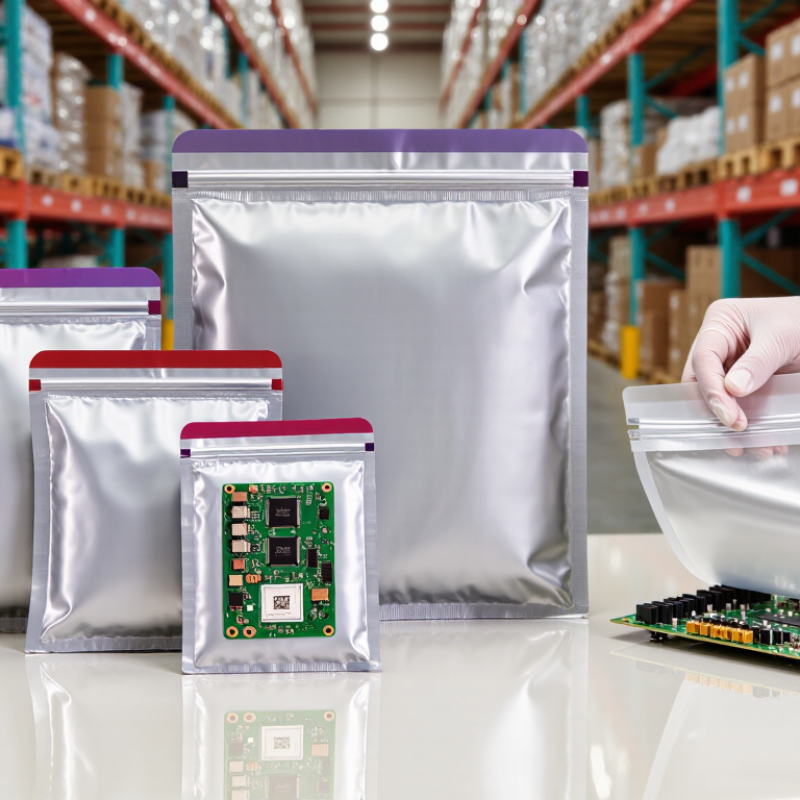
Choosing the China best ESD shielding bag means checking performance, not appearance. A reliable bag uses a metalized conductive layer between polymer films. This structure reflects electric fields and helps form a Faraday cage around sensitive components. The outer surface should dissipate charge safely. It should not behave like ordinary plastic.
ANSI/ESD S541 and IEC 61340-5-1 identify packaging as part of an ESD control system. ANSI/ESD STM11.31 measures shielding effectiveness, while ESD Association technical reports support verification through repeatable testing. Many qualification programs use a 50 nJ threshold when evaluating energy transferred through protective packaging. That number matters because tiny semiconductor structures can fail without visible marks. However, a 50 nJ result does not prove every bag is suitable. Humidity, seams, closure design, and aging can change performance. This is where specifications become less perfect.
Tips: Ask for batch test data, material thickness, surface resistance, and shielding results. Confirm whether the 50 nJ test covers the complete bag system. Test filled bags, not only flat film samples. Store them away from sharp edges and strong electromagnetic sources. A bag may pass factory inspection and still fail after repeated folding. Keep records for traceability. Inspect seals before use.
Global Compliance: IEC 61340-5-1, ANSI/ESD S541, and RoHS Requirements
For global buyers, ESD shielding bags must support more than basic static protection. IEC 61340-5-1 emphasizes a controlled electrostatic protected area, including grounding, handling, and verification. The bag works as one part of that system. It cannot correct poor grounding or careless handling.
ANSI/ESD S541 helps buyers evaluate packaging used for electrostatic-sensitive devices. A reliable bag should provide shielding, suitable mechanical strength, and consistent closure performance. Ask for test methods, production records, and lot-level inspection data. Check whether the reported values match the actual bag size and material thickness. Small details matter. A damaged seal can expose a circuit during shipping.
RoHS requirements also deserve careful review. Buyers should request current material declarations and evidence covering restricted substances. RoHS scope can depend on the product, market, and intended use, so a simple “RoHS compliant” label may be incomplete. This is where purchasing teams need to challenge assumptions. A transparent supplier should explain test limits, document revisions, and traceability. In practice, specifications are sometimes copied without verification. That weakness can create costly surprises at customs, in quality audits, or on the assembly floor.
Material Selection: Metallized Film, Static Dissipation, and 10⁴–10¹¹ Ω Resistance
For global buyers, the best China-made ESD shielding bag is not simply the darkest or thickest option. Metallized polyester film usually combines a visible metal layer with a protective plastic structure. That layer helps reduce electrostatic field penetration. The ESD Association’s ANSI/ESD S541-2019 packaging guidance separates conductive materials below 10⁴ ohms from dissipative materials between 10⁴ and below 10¹¹ ohms. Buyers should request both surface resistance and shielding-performance results. One number is not enough.
Resistance between 10⁴ and 10¹¹ ohms supports controlled charge decay. However, humidity, film thickness, printing, and sealing can change results. IEC 61340-5-1:2024 emphasizes controlled ESD protection programs, not packaging alone.
In practical inspections, measure the bag’s inner and outer surfaces separately. Check samples after flexing and heat exposure. A bag that passes before transport may behave differently after repeated handling. That detail is often missed.
Tips: Ask suppliers for test conditions, instrument models, and calibration dates. Confirm shielding attenuation using ANSI/ESD STM11.31 or an equivalent method. Inspect transparent windows, zippers, and seams, because weak points may bypass the metallized layer. Do not assume thicker film means better protection. No bag stays perfect forever. A realistic specification should include resistance limits, shielding targets, packaging quantity, and retest frequency. Independent laboratory verification is preferable when shipments contain sensitive semiconductor devices.
Chinese Supplier Evaluation: Shielding Performance, Thickness, Sealing, and MOQ
China Best ESD Shielding Bags for Global Buyers?
A reliable Chinese supplier should provide shielding test data, not only attractive samples. Ask for surface resistance, shielding attenuation, and charge decay results from recent production lots. Standards such as IEC 61340-5-1 and ANSI/ESD S541 can guide your evaluation. A bag may look metallic, yet its protective layer can be uneven. Visual checks are useful, but they are not enough.
Thickness affects durability, flexibility, and packing cost. Many buyers compare only microns, which can mislead them. A thicker bag is not automatically better. Request tolerances, film structure, and puncture or tear data. Check whether the inner surface remains clean after folding. Sealing also deserves close attention. Test the heat-seal width, seal strength, and leakage resistance. A weak edge can expose sensitive components during transport. Zipper closures may improve convenience, but they should not replace verified shielding performance.
Tips: Request three samples from different production batches. Test them after bending, rubbing, and repeated opening. Confirm whether the quoted MOQ applies to one size, one print, or mixed sizes. Ask for pre-production approval and clear inspection records. Some suppliers accept a small trial order, but the unit cost may rise sharply. That trade-off is easy to overlook. I would also question vague claims such as “full protection” without test conditions, equipment details, or report dates. Suppliers sometimes provide excellent samples, while later batches vary slightly. This is why written specifications and batch inspection matter.
Export Buying Guide: ASTM D1003 Clarity, ASTM D882 Strength, and Traceability
China Best ESD Shielding Bags for Global Buyers?
When evaluating ESD shielding bags, visual clarity deserves measured evidence, not attractive samples. ASTM D1003 testing reports total luminous transmittance and haze under defined conditions. Ask whether the report covers the exact film structure, thickness, and production lot. A bag can look clear in a showroom yet show higher haze after printing, sealing, or storage. Check both values. Clarity matters when operators inspect circuit boards without opening the package.
Strength requires a different question. ASTM D882 measures tensile properties of plastic film, including tensile strength and elongation. Request machine direction and transverse direction results, because film may perform differently across the roll. Review specimen thickness, conditioning, and test speed. A high tensile value alone does not guarantee reliable seals. Inspect filled bags for corner stress, seal wrinkles, and punctures during carton handling. Small failures become expensive export claims.
Traceability should connect each shipment to raw material records, test data, sealing settings, and inspection results. Lot numbers should appear on cartons and remain readable after transport. Keep retained samples for comparison. Do not accept a generic certificate with no matching batch reference. That shortcut is common, but weak. I would also verify shielding performance with a documented method, since ASTM D1003 and ASTM D882 do not prove ESD protection. No single report is enough. Reliable buying depends on linked evidence, repeatable testing, and honest review of what remains untested.